The news reaching us about the Lagos-Calabar Coastal Highway is a bitter pill to swallow for those of us who call Ondo South home. What was promised as a road that would hug our coastline, open up our riverine communities, and finally connect us to the economic pulse of Lagos and the wider coastal corridor has now been quietly turned inland, and the man standing at the centre of this decision is the Minister of Works, David Umahi. He has chosen to divert Sections 4A and 4B through the existing East-West Road, pushing the highway away from the very coastline that gave the project its name and its purpose. For the people of Ilaje, Ese-Odo, and the wider Ondo South, this is not just a technical adjustment. It is a broken promise dressed up as engineering wisdom.
Umahi speaks of deep pits and unstable terrain, of sharp sand that is far from the shoreline, of costs that would balloon if the road followed the coast. But these are the same conditions that have defined our communities for generations, and they are precisely why we needed this road in the first place. If building on our coastal soil is difficult, then the answer should have been to rise to that difficulty, not to abandon the coast altogether and call it prudence. The minister has chosen the easier path for his budget and his timeline, and in doing so he has turned his back on the people who stand to gain the most from a true coastal highway. He has decided that our stretch of coastline is not worth the trouble, and that is a decision he must answer for.
But we must go further and ask the questions that Umahi has so far refused to address. Was there no river boundary and road alignment prepared by a competent surveyor before this project was approved? Was there no test for the soil and the riverbank carried out before the government committed itself to a route? These are questions we must ask Umahi, because if such studies were done, then the problems he now cites should have been known from the very beginning, and the original coastal alignment should never have been announced with such fanfare. And if those studies were not done, then we are dealing with a level of negligence that has wasted our time, raised our hopes, and now dashed them without apology. Either way, the minister owes the people of Ondo South a full and honest explanation.
What makes this so painful is how different it is from what we were told to expect. We were not promised a road that would merely pass through Ondo State on its way to somewhere else. We were promised a coastal highway, a road that would run along the Atlantic edge, linking our fishing settlements, our markets, and our maritime trade to the larger economy. The Ilaje communities of Ugbonla, Awoye, and countless others were told that this project would bring them into the national fold, that the sea that has both fed and isolated them would finally become a bridge rather than a barrier. Now we are told that the road will run inland, through areas that already have roads, while our coastal belt is left to watch from a distance. The highway will still enter Ondo State, but it will not serve Ondo South in the way we were made to believe. That is the heart of our grievance.
Think of what this means for the general plan of our district. Ondo South is not like the inland parts of the state. Our economy is tied to the water, to fishing, to the creeks, to the oil and gas that lies beneath our soil and our seabed. A coastal highway was supposed to be the spine that connected these scattered communities, that made it possible to move goods, people, and opportunity along the length of our coastline. It was supposed to attract investment, open up tourism, and give our young people a reason to stay rather than migrate to Lagos or Akure. By diverting the road inland, the minister has severed that spine before it was even built. He has ensured that the communities with the greatest need will receive the least benefit, while the areas that already enjoy road access will be rewarded again.
There is also the matter of trust. When a government announces a project of this magnitude and names it after the coast, people along that coast plan their lives around it. They imagine new markets, new schools, new clinics, new jobs. They imagine their children travelling to Lagos in hours rather than days. To then change the route midstream, without genuine consultation, without a transparent review that includes the voices of the affected communities, is to treat those hopes as disposable. Umahi has not shown that he understands this. He has spoken of cost and terrain as if these were the only considerations, as if the lives of the people of Ilaje and Ese-Odo are a line item that can be adjusted when the budget gets tight. That is not leadership. That is convenience masquerading as governance.
We are not against development. We are not against building roads that work. But we are against being told one thing and given another, and we are against a minister who has decided that our part of the coast is too difficult to bother with. If the terrain is challenging, then let him say so honestly and bring the engineers, the communities, and the state government to the table to find a solution that does not abandon us. If the cost is high, then let him explain why our coastline is less deserving of investment than any other. What we will not accept is a quiet diversion that leaves Ondo South worse off than before, while the minister washes his hands of the consequences.
The people of Ondo South are watching, and we will not forget. We call on David Umahi to reconsider this diversion, to return to the original coastal alignment, and to treat our communities as partners in this project rather than obstacles to be avoided. Anything less is a betrayal of the trust that was placed in him, and a stain on a project that was supposed to unite the coast rather than divide it.
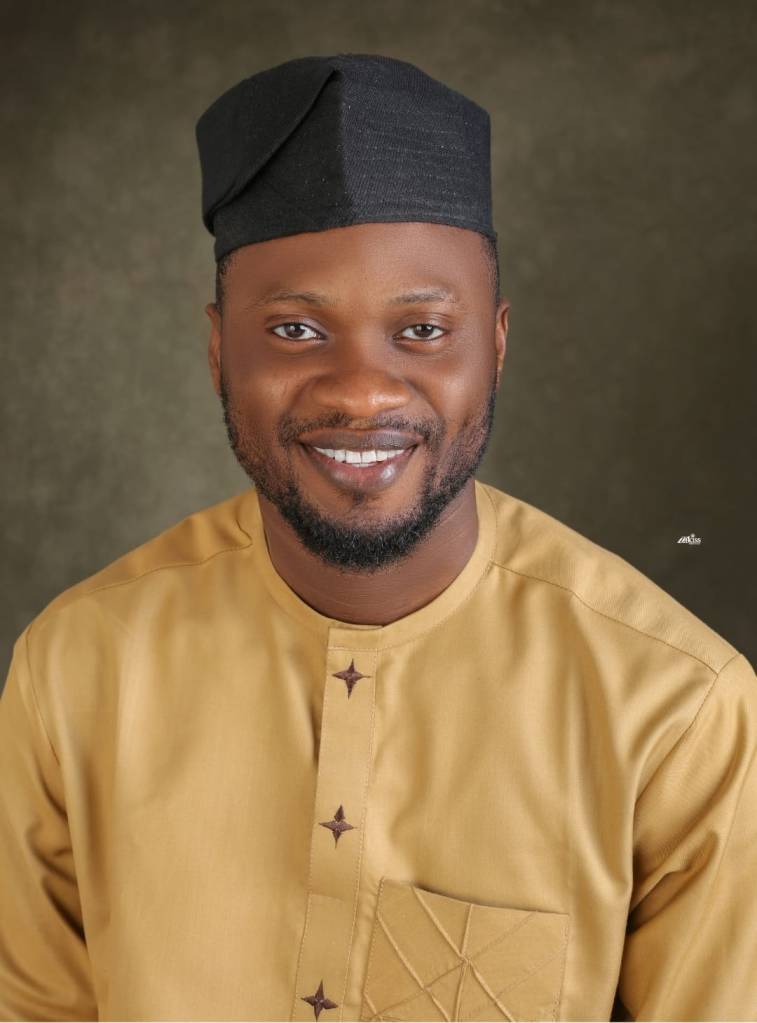
Amb. Kolawole Akinmosun
Irele, Ondo South, Ondo State.


Leave a Reply